Chocolate 3D PrintingEdible DesignFood TechnologyPrecision ConfectioneryArtisan ManufacturingLayer-by-Layer CreationThe Future of ChocolateChocolate 3D PrintingEdible DesignFood TechnologyPrecision ConfectioneryArtisan ManufacturingLayer-by-Layer CreationThe Future of Chocolate
A NEW ERA OF CONFECTIONERY
WHAT IS CHOCOLATE
3D PRINTING ?
Create customized chocolates with precision, consistency, and design freedom - from prototyping to production.
Food BrandsResearch LabsPremium Gifting
DEFINITION
THE TECHNOLOGY BEHIND THE MAGIC
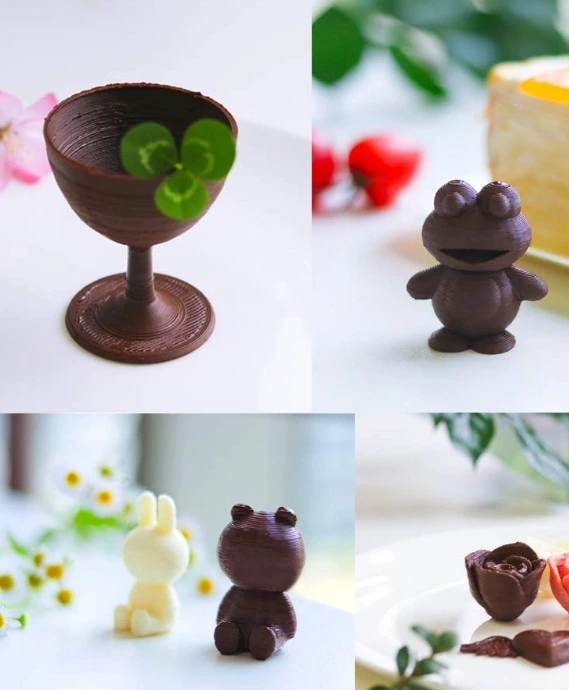
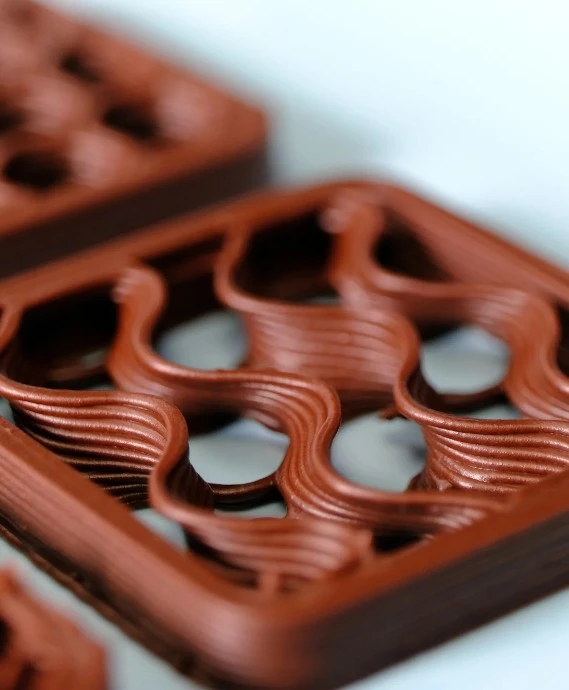
Chocolate 3D printing is an additive manufacturing process that uses chocolate as its
"ink." A specialized printer precisely deposits melted chocolate through a temperature-controlled nozzle,
building up objects layer by layer from a digital design file.
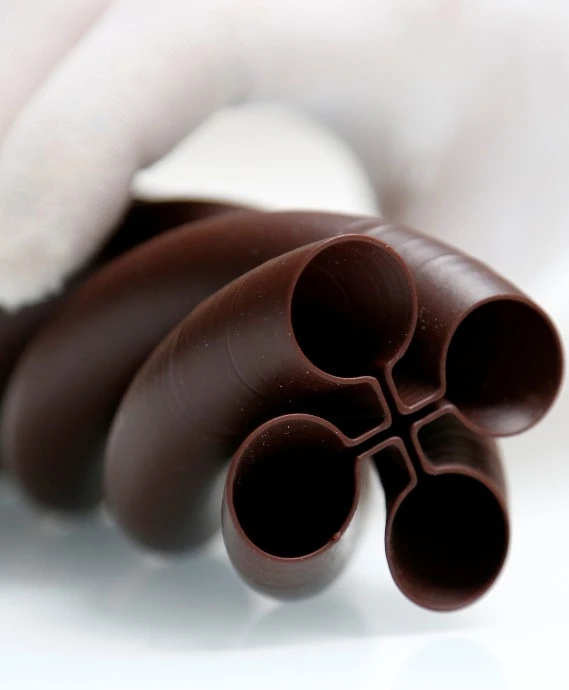
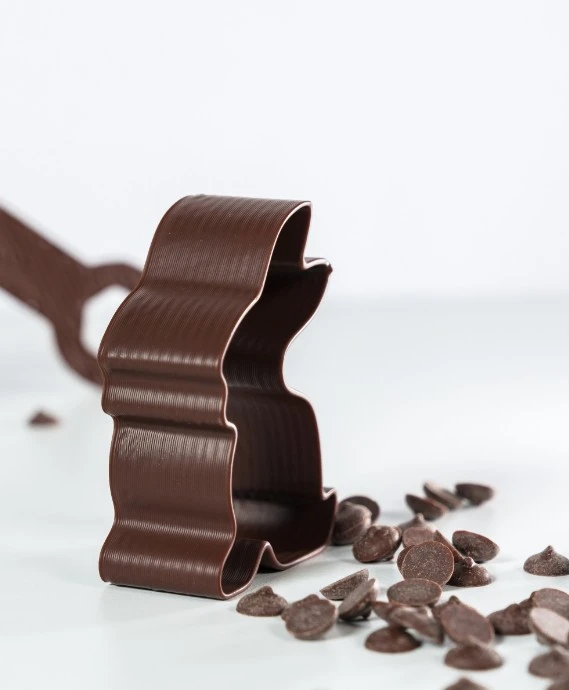
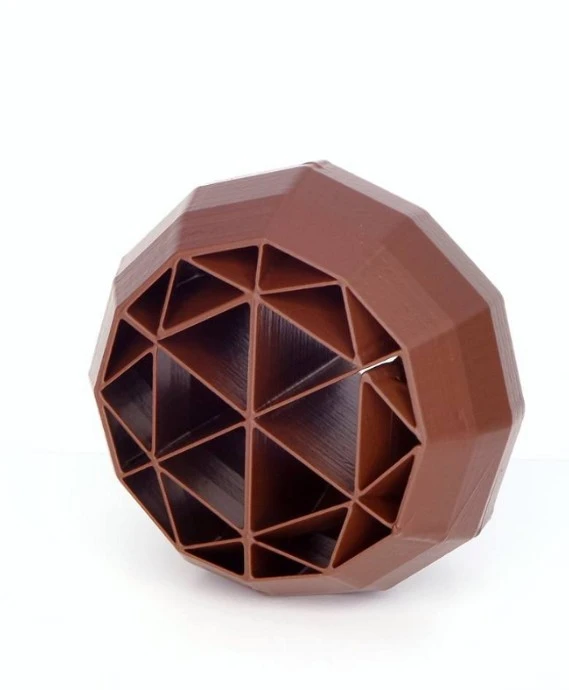
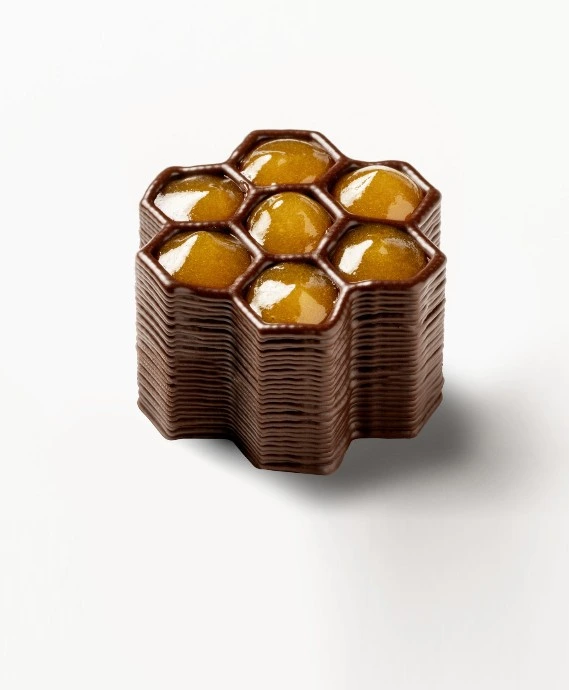
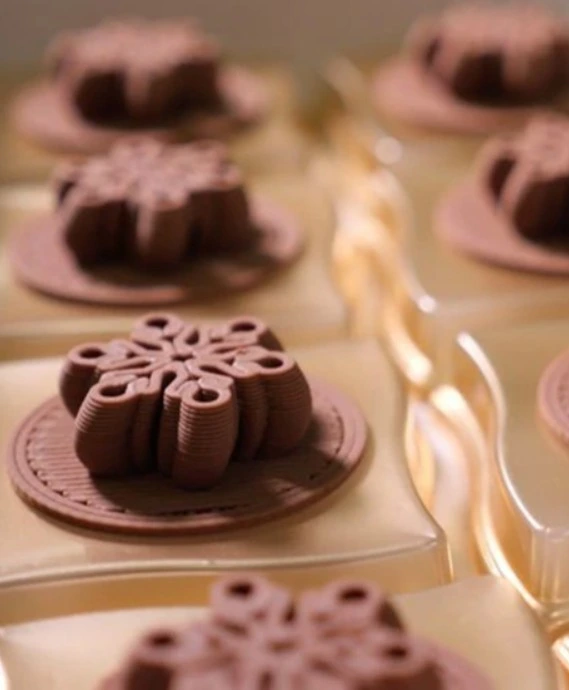
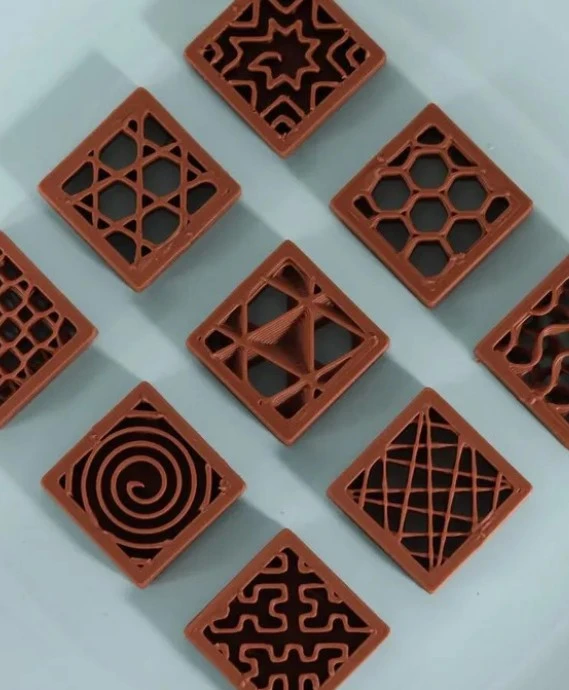
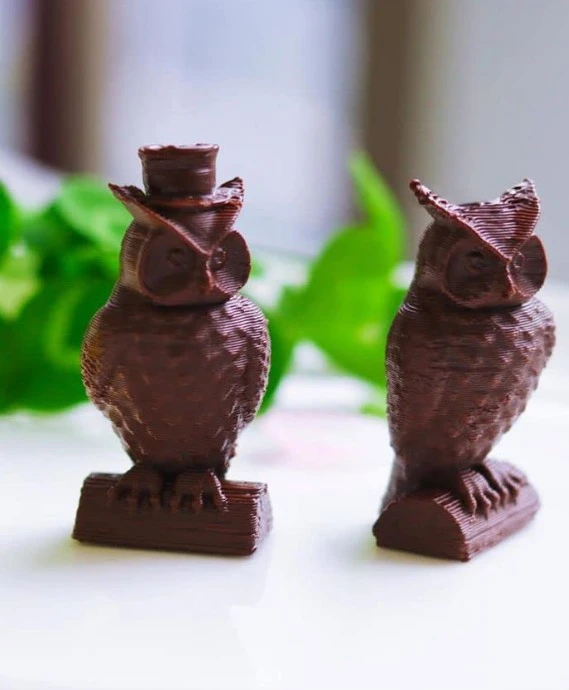
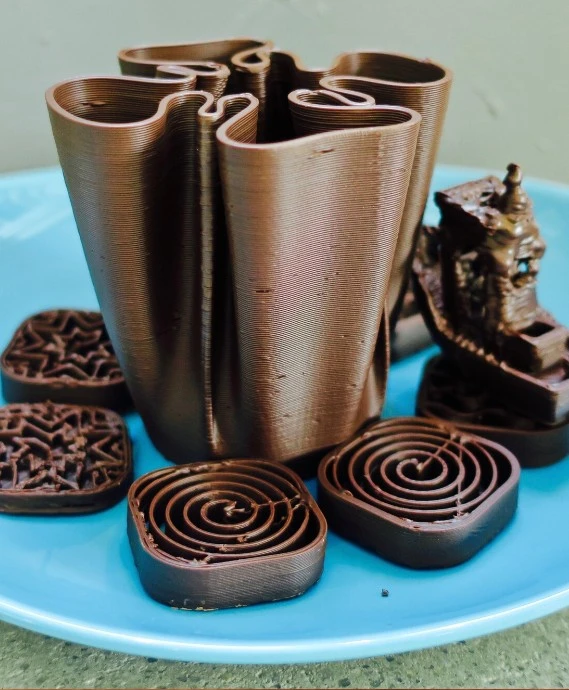
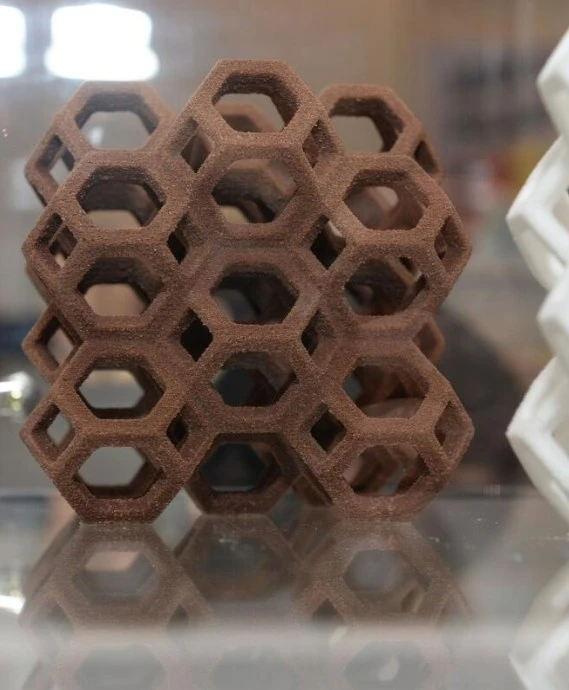
Unlike traditional chocolate moulding, 3D printing allows for geometries that would be physically impossible
to
cast — hollow spheres, interlocking lattices, complex organic curves, and personalized text or imagery
embedded
directly into the form.
The process leverages the unique rheological properties of chocolate: its ability to flow when warmed and
solidify when cooled makes it an ideal medium for precision deposition manufacturing.
01
Digital Design
3D model created in CAD software or scanned from a physical object.
02
CHOCOLATE TEMPERING SYSTEM
Chocolate is precisely tempered to achieve the ideal consistency, shine, and stable crystal structure for printing.
03
Slicing
Model converted into hundreds of thin horizontal layers
04
Controlled extrusion & Layer-by-layer deposition
Tempered chocolate is extruded through a heated nozzle and deposited layer by layer to build the desired shape accurately.
05
Cooling & SOLIDIFICATION
Each layer solidifies before the next is applied
06
Final structure integrity
The completed chocolate structure maintains its shape with smooth finishing, strong stability, and an attractive glossy appearance.
50
MICRON PRECISION
18-35°C
OPTIMAL TEMP
3+
CHOCOLATE TYPES
Unlimited
DESIGN POSSIBILITIES
HOW IT WORKS
FROM PIXEL TO PALATE
Design Your Piece
Create or upload a 3D model using software like Blender, Rhino, or Tinkercad. The design
is then converted
into a printer-readable file format (STL or OBJ).
Temper the Chocolate
Chocolate must be precisely melted and tempered to the correct temperature — typically
18-35°C depending on
variety — ensuring proper crystallisation and a glossy finish.
Slice & Print
Slicing software divides the 3D model into thin layers. The printer's heated syringe or
cartridge extrudes
chocolate along precise X-Y coordinates, building up each layer.
Cool & Finish
The printed piece is cooled gradually — sometimes in a temperature-controlled chamber —
to prevent bloom
and achieve the signature crystalline snap and shine of well-tempered chocolate.
USE CASES
WHERE ART MEETS
INDUSTRY
From Michelin-starred restaurants to wedding confectioners, chocolate 3D printing is redefining what's
possible in edible design — enabling personalisation, complexity, and production efficiency at unprecedented
scales.
Fine Dining & Gastronomy
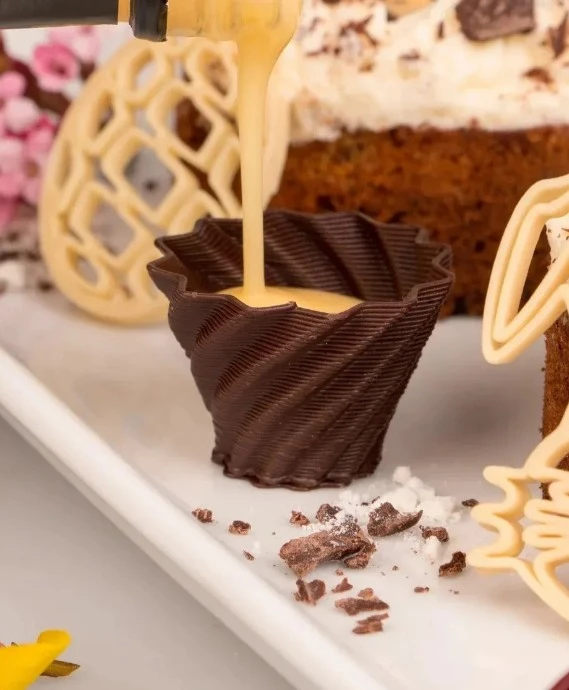
Chefs use 3D-printed chocolate to craft signature plated desserts with impossible geometric precision,
impossible to achieve by hand.
❤
Weddings & Events
Bespoke chocolate sculptures, personalised wedding favours, monogrammed truffles, and centrepiece
showpieces printed to order.
Artisan Retail
Chocolate boutiques offer on-demand printed portraits, architectural models, and customised gift packaging
in chocolate.
Brand Activation
Companies commission printed logos, product replicas, and branded confectionery for high-impact corporate
gifting and experiential marketing.
Education & Research
Food science departments and culinary schools use chocolate printing to study rheology, crystallisation,
and flavour diffusion in novel geometries.
Global Manufacturing
Large confectionery companies deploy industrial 3D printing lines for rapid product prototyping and
small-batch novelty item production.
ADVANTAGES
WHY
PRINT
CHOCOLATE ?
Chocolate 3D printing unlocks a new design language for confectioners — combining the warmth and flavour of
artisan chocolate with the precision of digital fabrication.
★
Mass Customization
Create shapes, cavities, lattices, and interlocking structures that are physically impossible to achieve
through moulding, casting, or hand-crafting.
◎
Complex geometrics
Each piece can be uniquely different with no additional tooling cost — ideal for names, portraits, logos,
and per-customer customisation at scale.
↗
Consistent quality
Additive manufacturing deposits material only where needed, dramatically reducing the excess waste common
in traditional chocolate production.
▣
Reduced Manual Labour
New product concepts go from digital design to edible prototype in hours, accelerating development cycles
for confectionery brands and pastry chefs.
☕
Rapid Prototyping
Once a design is perfected digitally, it can be reproduced with identical precision thousands of times —
eliminating inconsistency.
MATERIALS
CHOOSING YOUR
CHOCOLATE
Note: Choosing your chocolate depends upon chocolate's Temperature and Viscosity.
Dark Chocolate
The most widely used chocolate for 3D printing. High cocoa butter content gives excellent viscosity control
and produces the sharpest details. Solidifies cleanly and holds complex geometry well.
Best detailFast coolingHigh contrast
Milk Chocolate
Popular for its warm colour and crowd-pleasing flavour. The milk solids slightly alter flow characteristics,
requiring careful temperature management.
Warm toneGift appealModerate detail
White Chocolate
The most challenging to print due to its lower melting point and higher sugar content. However, it provides
a brilliant canvas for coloured cocoa butters and painted finishes.
ColourableDelicateVisual impact
LOOKING AHEAD
THE FUTURE OF
EDIBLE FABRICATION
Chocolate 3D printing stands at the intersection of food technology, digital manufacturing, and culinary art.
As printer hardware becomes more accessible, the technology is poised to transform the confectionery industry.
Multi-material printing with different chocolate varieties
Combination of inclusions and flavour compounds
AI-assisted tools for structure optimisation
Better visual appeal and eating experience
“The 3D printer is to the chocolatier what the camera was to the painter — it doesn't replace the craft, it
expands what craft can mean.”
— FOOD TECHNOLOGY REVIEW, 2024
Multi-Material Printing
Single prints combining dark, milk, and white chocolate — or incorporating fillings, nuts, and flavoured
compounds — in one seamless process.
AI-Generated Designs
Generative design tools creating structurally optimised and visually stunning chocolate forms based on
brief text or image inputs.
Nutritional Customisation
Printing personalised chocolate products with precisely calibrated macronutrient and micronutrient
profiles for health-conscious consumers.
In-Store Print Kiosks
Retail chocolate printers that allow customers to design and print their own bespoke pieces in minutes
while they wait.
OUR SOLUTION
Bring Chocolate Ideas to Life with our Chocolate 3D printing
PROFESSIONAL
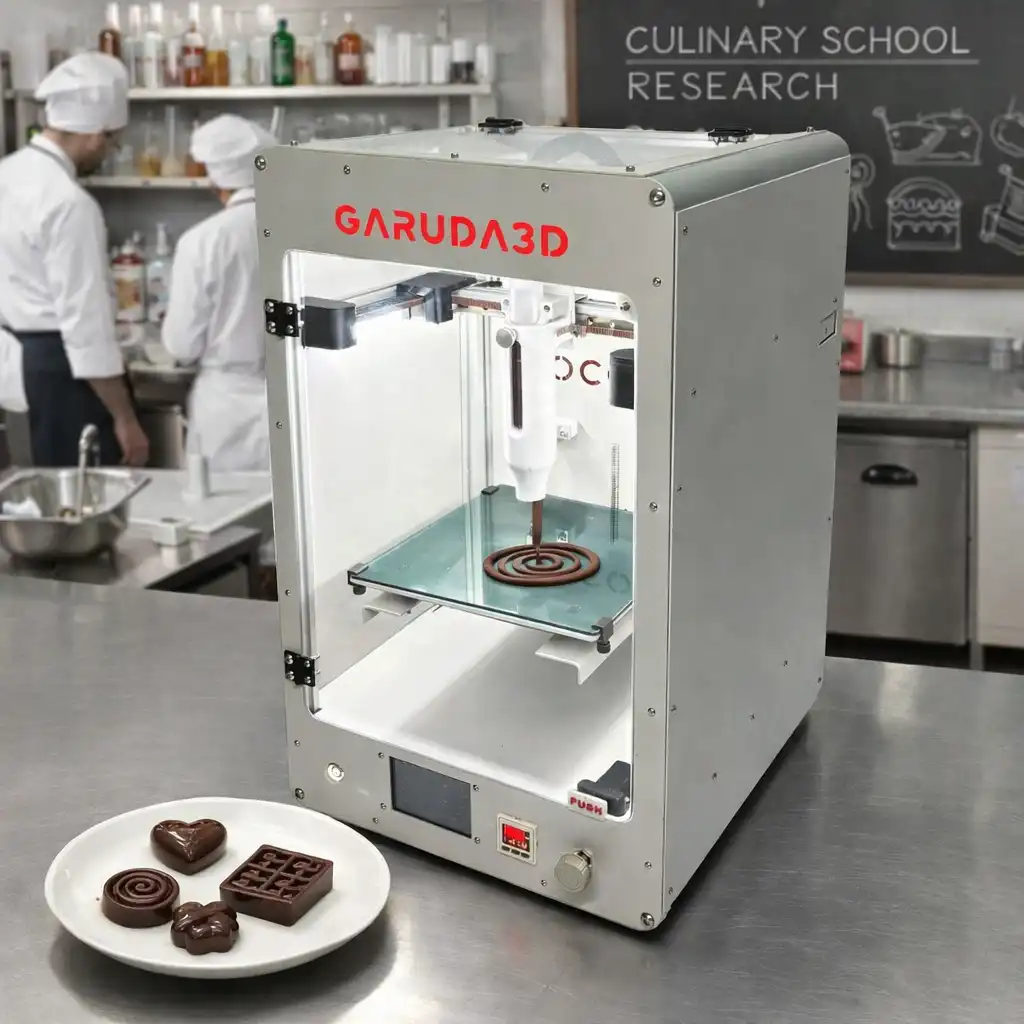
Explore our Cocoa 3D Chocolate 3D Printer
Reliable Chocolate additive manufacturing platform designed for chocolate, dough, puree, paste, and customised edible product development for commercial kitchens, R&D labs, and educational use.
Everything you need to know before investing in your Garuda3D Chocolate Printer.
Can't find your answer? Contact us directly.
What type of chocolate can be used?
The printer supports a wide range of chocolate types, including compound chocolate, dark, milk, and white chocolate.
• Compound chocolate is easy to work with and does not require tempering, making it ideal for stable and consistent printing.
• Real chocolate (dark, milk, white) requires proper tempering before loading to ensure smooth flow, good layer bonding, and a glossy finish. Couverture chocolate (with higher cocoa butter content) typically delivers the best results.
Does the printer require chocolate to be pre-tempered?
Yes, the chocolate should be tempered before loading into the syringe. The printer then maintains the
chocolate at the correct printing temperature throughout the job, preventing recrystallisation. Garuda3D
provides a complete setup guide covering tempering techniques for print use.
What software is needed to operate the printer?
3D design files can be created in any CAD software (Blender,
Tinkercad, Fusion 360) or sourced from existing STL libraries.
The printer is compatible with standard 3D slicing software. Garuda3D recommends and supports specific
slicers optimized for food extrusion. A training session is included with every
purchase.
How do I clean the printer between prints?
The syringe and nozzle assembly are fully removable and dishwasher-safe. Between chocolate varieties, a
warm
water flush of the nozzle is sufficient. All food-contact parts can be removed and sanitised following
standard food safety protocols, typically in under 10 minutes.
What is included in the warranty?
Every printer ships with a 1-year warranty covering manufacturing defects, motion components, and
electronic
systems. Extended service plans are available. Garuda3D has a pan-India service network with trained
technicians for on-site support.
Can I print multiple chocolates in one session?
Yes. Multiple smaller pieces can be arranged on the print bed simultaneously. The syringe capacity of
50ml allows for continuous printing of several pieces before a refill is needed. For high-volume
commercial production, Garuda3D can advise on workflow optimisation strategies.
"Transform Ideas with Garuda3D Innovation Services"